We often confuse "transdisciplinary" with "interdisciplinary" and "multidisciplinary," but they are different. Transdisciplinary learning is unique because it doesn’t focus on individual school subjects. Instead, it helps students understand and solve real-world problems by using knowledge from different subjects together.
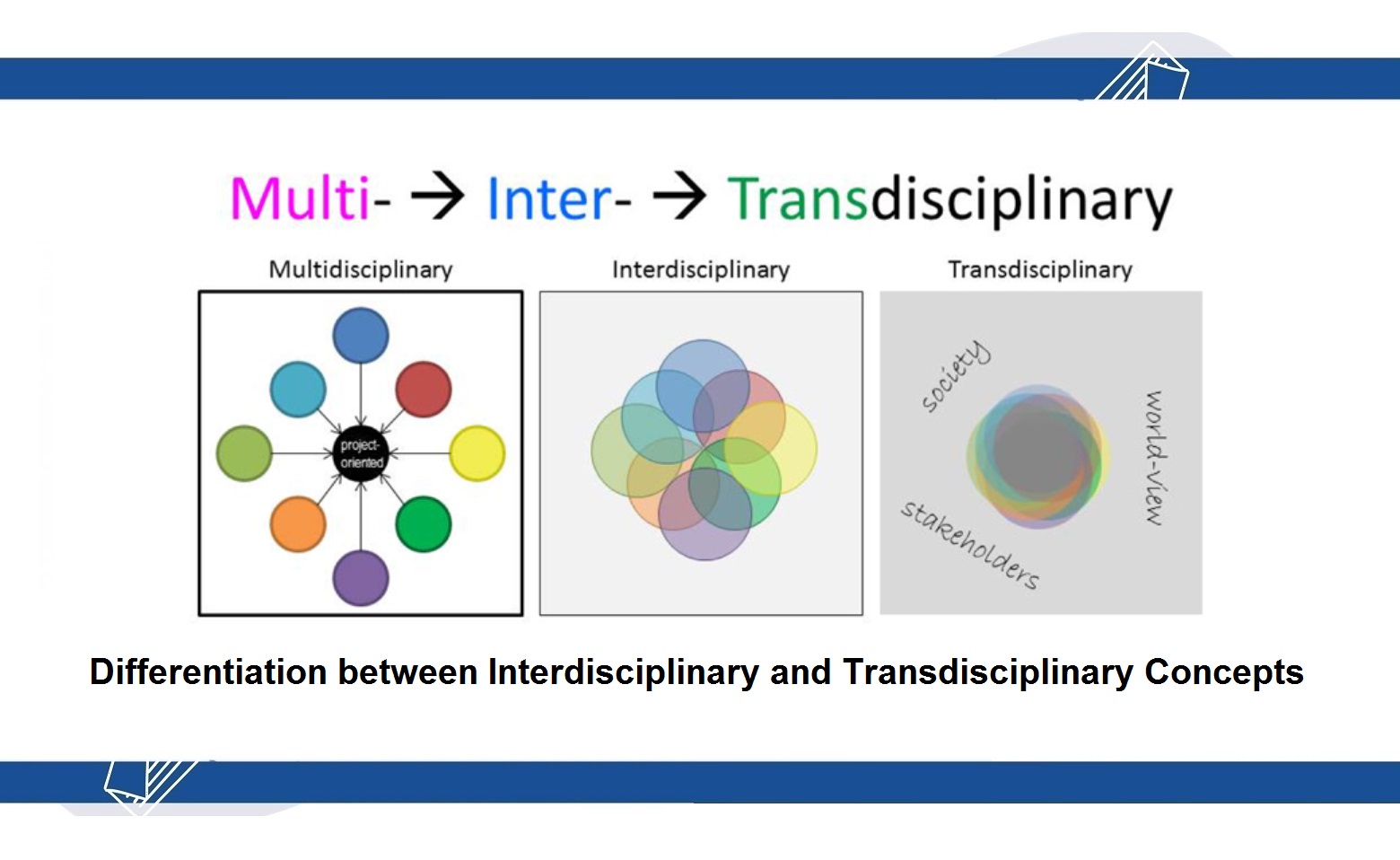
Image courtesy: https://imaqpress.com/2678/differentiation-between-interdisciplinary-and-transdisciplinary-concepts/
The Differences in Simple Words:
-
Interdisciplinary: Different subjects connect and share ideas, and sometimes they create something new.
Example: If students are learning about space exploration, they might combine physics (to understand gravity), math (to calculate distances), and history (to study past space missions). The subjects work together to deepen understanding.
Think of it like: A stew—ingredients mix, but you can still see and taste them separately. -
Multidisciplinary: Different subjects study the same topic, but they stay separate. Students learn the topic from different angles, but subjects don’t mix.
Example: If students study climate change, they might learn about its effects in science, its impact on people in geography, and the financial side in economics, but each subject stays separate.
Think of it like: A mixed salad—everything is in one bowl, but each ingredient remains separate. -
Transdisciplinary: Subjects disappear, and learning is based on a big question, theme, or problem. Students use knowledge from different subjects to explore and solve real-world issues.
Example: If students study pollution, they will use science to understand air quality, geography to map affected areas, ethics to discuss responsibility, and technology to find solutions—all at the same time. The focus is on solving the problem, not the subjects.
Think of it like: A cake—once the ingredients are mixed and baked, you can’t separate them!
Image courtesy: https://mariosoflano.home.blog/2019/04/14/interdisciplinarity/
Why is Transdisciplinary Learning Important?
Transdisciplinary learning helps students:
✔ Think critically and solve real-world problems
✔ Connect learning to their everyday lives
✔ Explore topics based on their interests and questions
✔ Learn in a meaningful and natural way instead of keeping subjects separate
This approach makes learning more engaging, practical, and useful beyond school!


