Friday, 14 March 2025

What Does Transdisciplinary Mean?

Adapted from - PYP From Principles to Practices (https://ibo.my.site.com/ibportal/)

We often confuse "transdisciplinary" with "interdisciplinary" and "multidisciplinary," but they are different. Transdisciplinary learning is unique because it doesn’t focus on individual school subjects. Instead, it helps students understand and solve real-world problems by using knowledge from different subjects together.
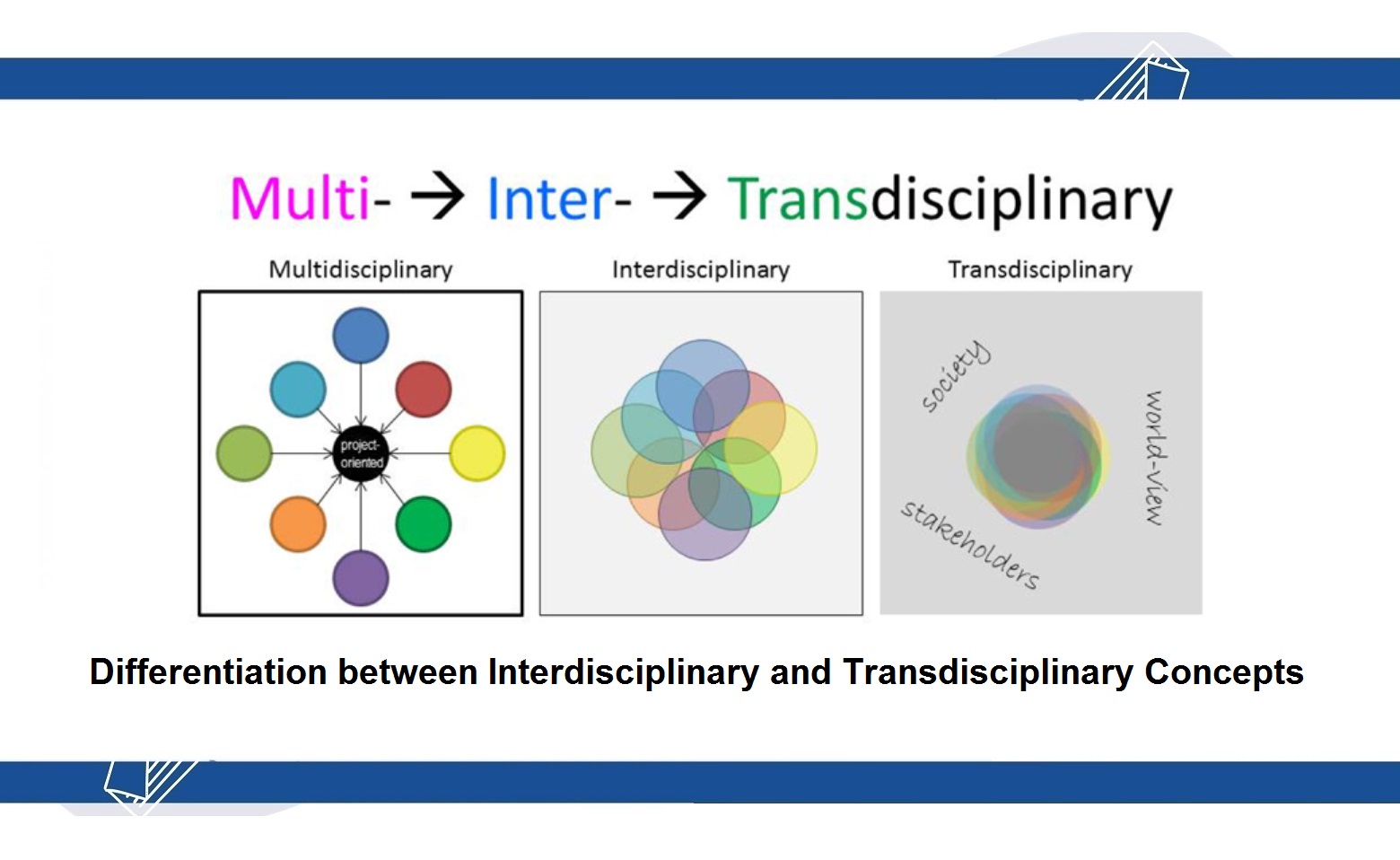
Transdisciplinary Concepts

Image courtesy: https://imaqpress.com/2678/differentiation-between-interdisciplinary-and-transdisciplinary-concepts/

The Differences in Simple Words:

  • Interdisciplinary: Different subjects connect and share ideas, and sometimes they create something new.
    Example: If students are learning about space exploration, they might combine physics (to understand gravity), math (to calculate distances), and history (to study past space missions). The subjects work together to deepen understanding.
    Think of it like: A stew—ingredients mix, but you can still see and taste them separately.

  • Multidisciplinary: Different subjects study the same topic, but they stay separate. Students learn the topic from different angles, but subjects don’t mix.
    Example: If students study climate change, they might learn about its effects in science, its impact on people in geography, and the financial side in economics, but each subject stays separate.
    Think of it like: A mixed salad—everything is in one bowl, but each ingredient remains separate.

  • Transdisciplinary: Subjects disappear, and learning is based on a big question, theme, or problem. Students use knowledge from different subjects to explore and solve real-world issues.
    Example: If students study pollution, they will use science to understand air quality, geography to map affected areas, ethics to discuss responsibility, and technology to find solutions—all at the same time. The focus is on solving the problem, not the subjects.
    Think of it like: A cake—once the ingredients are mixed and baked, you can’t separate them!


    Image courtesy: https://mariosoflano.home.blog/2019/04/14/interdisciplinarity/ 

     Why is Transdisciplinary Learning Important?

Transdisciplinary learning helps students:
✔ Think critically and solve real-world problems
✔ Connect learning to their everyday lives
✔ Explore topics based on their interests and questions
✔ Learn in a meaningful and natural way instead of keeping subjects separate

This approach makes learning more engaging, practical, and useful beyond school!

Sunday, 9 March 2025

Why Teach? – From My Heart to the Classroom

Teaching – it’s not just a profession, it’s a calling. I’ve often asked myself, why did I choose to teach? And every time, the answer has come from the heart, not the head. It’s not about lesson plans, report cards, or assessments — it’s about humans, connections, and change.

The First Spark

I didn’t just stumble into teaching. It was a conscious choice, but I never realized how deeply it would transform me. When I first stepped into a classroom, I thought my role was to impart knowledge. Little did I know that my students would end up teaching me so much more. Their curiosity, innocence, and boundless imagination made me realize — teaching isn’t about what you deliver, it’s about what you ignite.

The Power of Impact

I’ve seen it happen. The moment when a student gets it. That spark in their eyes when they understand something they once thought was impossible. The joy in their voice when they share their learning with someone else. Every time that happens, I’m reminded why I teach. It’s not for the paycheck or the holidays; it’s for those transformative moments.

Building Relationships, Not Just Knowledge

Over the years, I’ve learned that teaching is less about transferring information and more about building relationships. When you understand a child beyond their academics — their fears, their dreams, their strengths — you unlock the potential that even they don’t know exists.

I remember a student who was painfully shy and hesitant to participate. Over time, through gentle encouragement, he found his voice. The day he confidently presented in front of the class was the day I realized — my role isn’t just to teach; it’s to empower.

The Real-World Connection

Teaching goes beyond textbooks. It’s about helping students make sense of the world around them. Whether it’s through travel writing, eco-crafts, or reflective practices, my goal has always been to connect learning to real life. When a child sees the relevance of what they’re learning, it sticks. And honestly, that’s the most fulfilling part.

A Two-Way Street

Here’s the thing — teaching has shaped me just as much as I’ve shaped my students. It has made me more patient, empathetic, and reflective. Every mistake, every success, every tear, and every smile has contributed to my personal growth. I’ve realized that teaching isn’t about being the ‘expert’ in the room; it’s about being the most human in the room.

Why I’ll Always Teach

So, why teach? Because I believe in the power of education to change lives. Because I believe every child has untapped potential waiting to be discovered. Because the world needs empathetic, curious, and compassionate humans — and I get to play a small part in shaping them.


What Does Transdisciplinary Mean?

Adapted from - PYP From Principles to Practices (https://ibo.my.site.com/ibportal/) We often confuse "transdisciplinary" with ...